
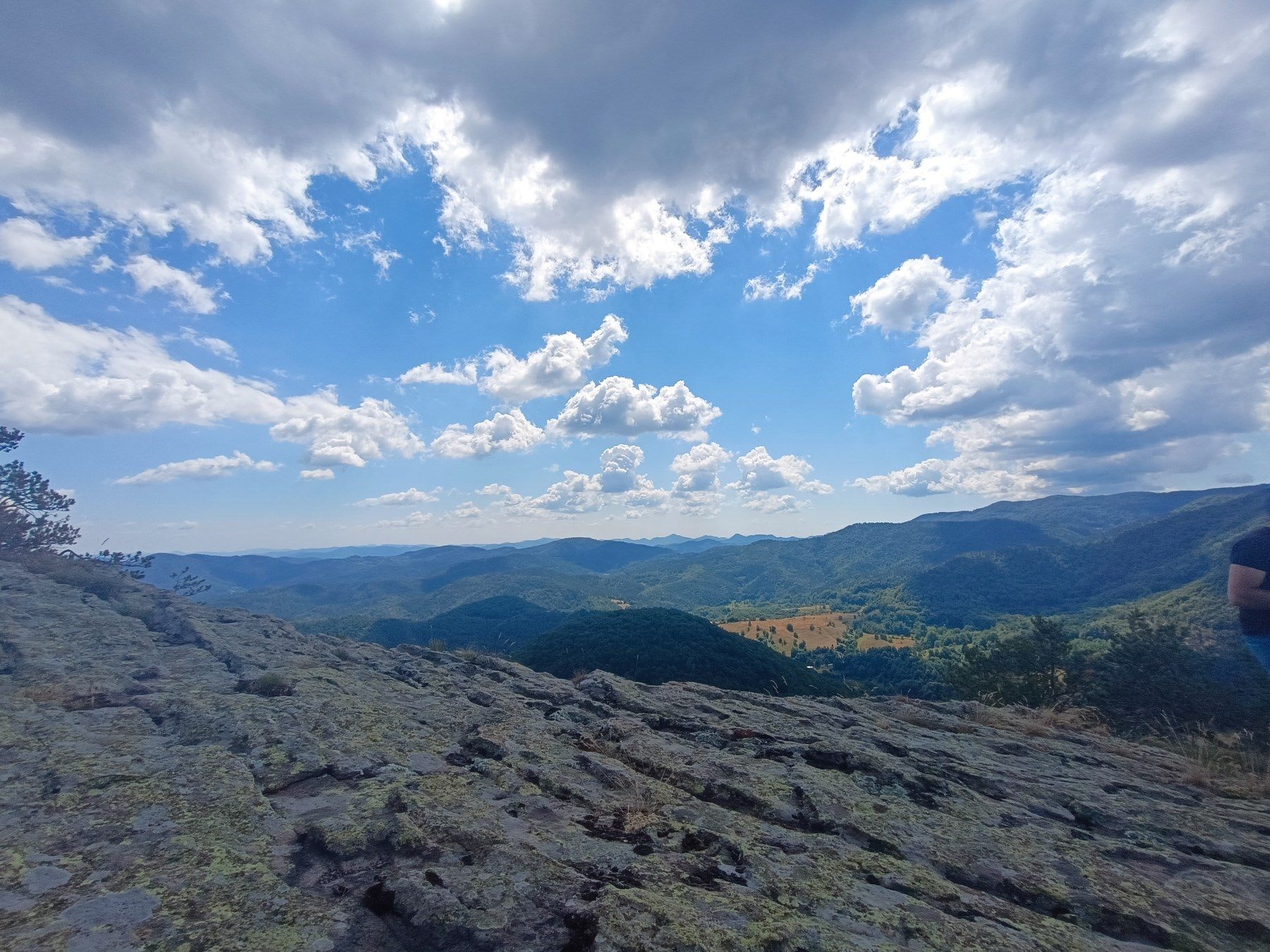
Most travellers planning a European trip cycle through the same shortlist: the Alps, the Dolomites, a Greek island, a Croatian coast. Almost none of them get as far as the Rhodope Mountains, and that is exactly the point.
This is the longest mountain range in Bulgaria, rounded and forested rather than jagged, spread across the south of the country and reaching over the border into Greece. It is old country, tied to the myth of Orpheus, dotted with stone villages and marble caves, and, by the standards of modern Europe, almost empty. Here is why it belongs on your list, and how to see the best of it.
A mountain range hidden in plain sight
The Rhodopes are not remote in the way the Arctic is remote. They sit a few hours' drive from Plovdiv, one of the oldest continuously inhabited cities in Europe. What keeps them quiet is simply that the crowds go elsewhere. Trails that would be busy in the Alps see a handful of walkers a day here, and often none at all.
The walking is gentler than Bulgaria's higher Rila and Pirin ranges. Paths roll through pine and beech forest, open onto meadows, and break suddenly onto cliff-edge views. You can have a short morning in a cave or a full day on a fortress ridge, and either way you are more likely to meet a shepherd than another tourist.
The Upper Arda valley
The corner we know best is the Upper Arda valley, in the eastern part of the Western Rhodopes, where the longest Rhodope river has its source a few kilometres from the Greek border. The village of Mogilitsa sits at its heart, 26 km south of the town of Smolyan.
It is a small place, but the walking around it packs in an unusual variety: an undeveloped marble cave you enter by headlamp, cliff-edge platforms including one with a glass floor, a hilltop fortress with ancient walls, sacred peaks wrapped in legend, and a short marble canyon you cross by boat.
History you can walk to
The Rhodopes wear their past openly. On one route you pass a rock inscription estimated at four to five thousand years old, most likely Thracian, its meaning still unknown. On another you reach fortress walls that were used in turn by Thracians, Byzantines and Bulgarians. Villages hold churches from the nineteenth century and the ruins of grand Ottoman-era lodges.
There is folklore woven through all of it, from a peak said to hide a sanctuary of Dionysus to the grave of Rufinka, a real village woman remembered in a traditional song that Bulgarians still know by heart.
A place that fits how you like to travel
Long ridge walks are here for those who want them. So are easy days with a cave and a boat, and quiet corners for anyone who mainly wants to put their phone away and slow down. The Upper Arda holds all of it within a short drive.
Because the villages are small and English is not widely spoken, a local guide makes the difference between a nice drive and a real trip. Guides who grew up on these ridges can shape a few days around what you enjoy.
When to come, and how
Late spring through autumn is the sweet spot, with full rivers in spring, cool comfortable summers, and clear golden light in September and October. You reach the valley by flying into Sofia and driving south, fast on the motorway to Plovdiv and then slowly, scenically, up into the mountains.
- Fly into Sofia, the main international gateway
- Late spring to autumn for the best walking
- Go with a local guide on the unmarked trails
- Stay in a family guesthouse in the villages, not a resort
Common questions
- Where exactly are the Rhodope Mountains?
- In southern Bulgaria, running along and across the border with Greece. The Upper Arda valley and the village of Mogilitsa are in the eastern Western Rhodopes, about 26 km south of the town of Smolyan.
- Are the Rhodopes good for beginner hikers?
- Yes. The walking here is easier than in Bulgaria's higher Rila and Pirin ranges, with plenty of short and half-day options alongside full-day routes. A guide can match the day to your fitness.
- Do I need to speak Bulgarian?
- Not to visit with the society. Our guides speak English. Away from guided trips, English is limited in the villages, which is part of why a local guide helps so much.
- Is it expensive?
- No. Bulgaria is among the more affordable countries in the EU, and the Upper Arda, with its family guesthouses and home cooking, is inexpensive even by Bulgarian standards.