
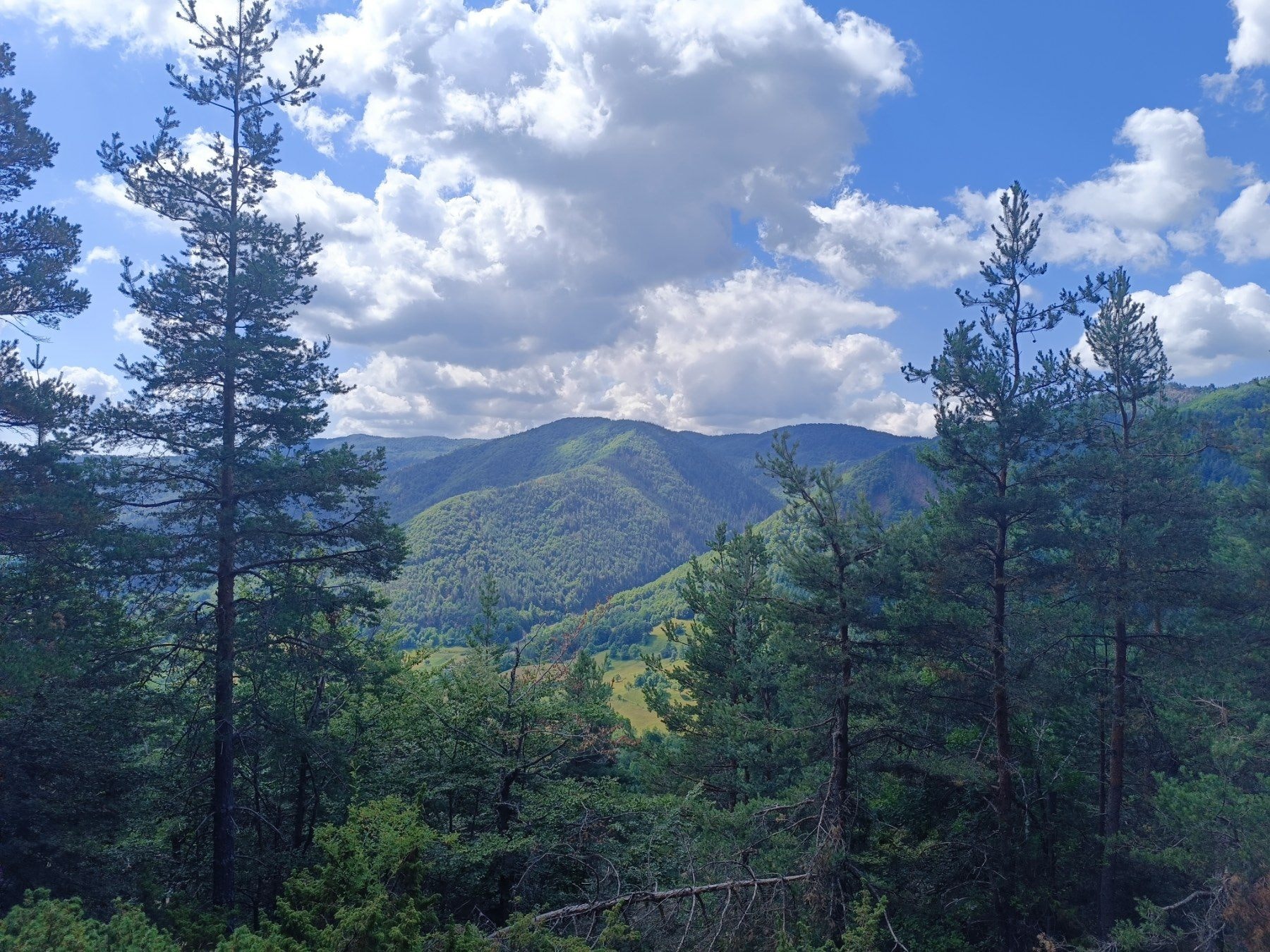
Most people plan a holiday by starting with a place. This one is worth starting with a feeling. You want to be somewhere your phone stops mattering, where a day is shaped by light and weather rather than by notifications, and where you come home feeling like a person again instead of a battery on ten percent. That is what a digital detox holiday is really for, and it is what the village of Mogilitsa quietly does best.
Mogilitsa sits at 960 metres in the Upper Arda valley, in the eastern part of the Western Rhodopes, 26 km south of Smolyan and a few kilometres from the Greek border. It is small, uncrowded and a long way from the noise. To show what it offers, picture three people who could not seem more different: a software developer who has not had a quiet evening in months, a nurse who has just retired after decades of looking after everyone but herself, and a young creator hunting for somewhere no one has filmed to death. The valley gives each of them the same thing, room to switch off, in the shape that fits their life. And what it gives them, it gives anyone.
The thing you actually need a holiday from
Most holidays promise more: more sights, more activities, more to tick off. A digital detox promises less, and less turns out to be the harder thing to find. The luxury here is not a spa or a view you have already seen a thousand times on a screen. It is a morning with nowhere to be, a signal that fades once you leave the guesthouse, and an evening quiet enough to hear the river.
You do not have to earn the quiet here or perform it. Mogilitsa is not a wellness brand or a retreat with a timetable. It is a working mountain village where the pace was always slow, and where the days still run on weather, walking and food rather than on a screen. Coming here to disconnect is less a programme and more a matter of turning up and letting the place set the tempo.
For the one who lives in their inbox
If your day is a scroll of messages and your evenings leak into the same screen, the first day here can feel strange. The reflex to check something has nowhere to go. By the second morning that reflex fades, and you notice you have read more of a book, slept more deeply and held a whole conversation without glancing down. Nothing here is competing for your attention, which is exactly the point.
You can still get online when you truly need to, so a held-over call or two is not a disaster. But the valley makes it easy to close the laptop and mean it. Walk out to a cliff-edge viewpoint like The Peak, follow the Arda upstream to the old beech where the river begins, or sit through an afternoon of changing light, and the work brain that never switches off finally does.
For the one who has looked after everyone else
Some people arrive tired in a way a weekend cannot touch, the tiredness of years spent carrying other people. A retired nurse, a carer, a parent at the end of a long stretch. For them the gift here is being looked after for a change, gently and without fuss. The guesthouses are family-run, the cooking is homemade, and your hosts tend to treat you as a guest in their home rather than a booking.
There is no pressure to walk hard or to do anything at all. A short, level stroll to a viewpoint, a slow morning over warm banitsa and vegetables from the garden, an hour by the river with nothing to prove. If you do want more, a local guide can shape an easy day around you. The days ask nothing of you, and for someone used to giving everything, that is its own kind of medicine.
For the one chasing something no one has filmed yet
If you make things for a living, or want to, the trouble with most beautiful places is that they are already used up. Every angle has been shot and every viewpoint tagged. Mogilitsa has not been. A marble canyon you cross by boat, a glass-floored platform on the lip of a cliff, an undeveloped cave you enter by headlamp, an old fortified mansion, a village with a giant carved wooden spoon in its square. It is a great deal of genuinely original material within a short drive, and almost none of it is on anyone's feed yet.
The catch, and it is a good one, is that the best way to make something here is to put the phone down first. Spend a day walking and talking with the guides, hear why a peak is held sacred or who Rufinka was, and the story you leave with runs deeper than a quick clip. Disconnecting and creating are not opposites in this valley. The disconnecting is what gives you something worth saying.
How to actually switch off here
Switching off is partly a decision and partly a matter of setting things up so the decision is easy. A few simple habits do most of the work.
- Tell people before you leave that you will be slow to reply, so no one is waiting on you.
- Leave the laptop in the room, or better in the bag, and keep the walking days screen-free.
- Let a guide plan a day or two, so you are not the one navigating or making decisions.
- Eat where you are staying and take the meals slowly; the home cooking is part of the rest.
- Come for at least three or four nights, since the first day is usually the one your head is still spinning.
What the quiet gives back
Whoever you are when you arrive, the valley tends to hand back the same thing: a clearer head and a slower pulse. The coder sleeps. The carer is cared for. The creator finds a story. And the person who could not quite say what kind of holiday they wanted discovers that this was it.
None of it asks you to be an athlete, an influencer or anything in particular. You need only be someone who could do with switching off for a while. Come for a few quiet days in the Upper Arda, let a guide and a guesthouse take care of the details, and let the mountains do the rest.
Common questions
- Can I still get online if I need to?
- Yes. The guesthouses generally have a connection, so you can deal with anything urgent or take the occasional call. Do not count on mobile signal once you are out on the trails, so save anything you actually need before you set off. The valley simply makes it easy to leave the phone alone the rest of the time, which is the whole point of coming.
- Is it a good place to come on my own?
- Very much so. It is safe, quiet and welcoming, the guesthouses are family-run, and a local guide can go out with you if you would rather not walk alone. Solo travellers, including older ones, tend to settle in quickly. One thing to check ahead: the Nadarska cave is entered only with a guide, and the guided day tours need a minimum of four people, so ask what is running on your dates.
- How do I get there without a car?
- Plan the journey before you leave: the drive from Sofia takes roughly four hours through Plovdiv and Smolyan. Leave time for breaks on the mountain road.
- What is there to do if I want to do almost nothing?
- Plenty of nothing, done well: short level walks to viewpoints, slow meals of home cooking, an afternoon by the river or reading in a meadow. If the mood changes, caves, a canyon boat trip and longer walks are all close by, but none of it is compulsory.
- Is it a good place to film or make content?
- Yes, and unusually so, because most of it is not on anyone's feed yet: a boat trip through a marble canyon, cliff-edge glass viewpoints, wild caves and an old Ottoman-era mansion. A guide can take you to the sites and tell you the stories behind them, which is often the part that makes the content worth watching.