
Some holidays start with a clear picture: the walk you want to finish, the museum you have read about, the beach chair. This one starts with a question. You know you want to go somewhere. You just cannot yet say what kind of trip you are actually looking for, and every option online seems to demand that you already know.
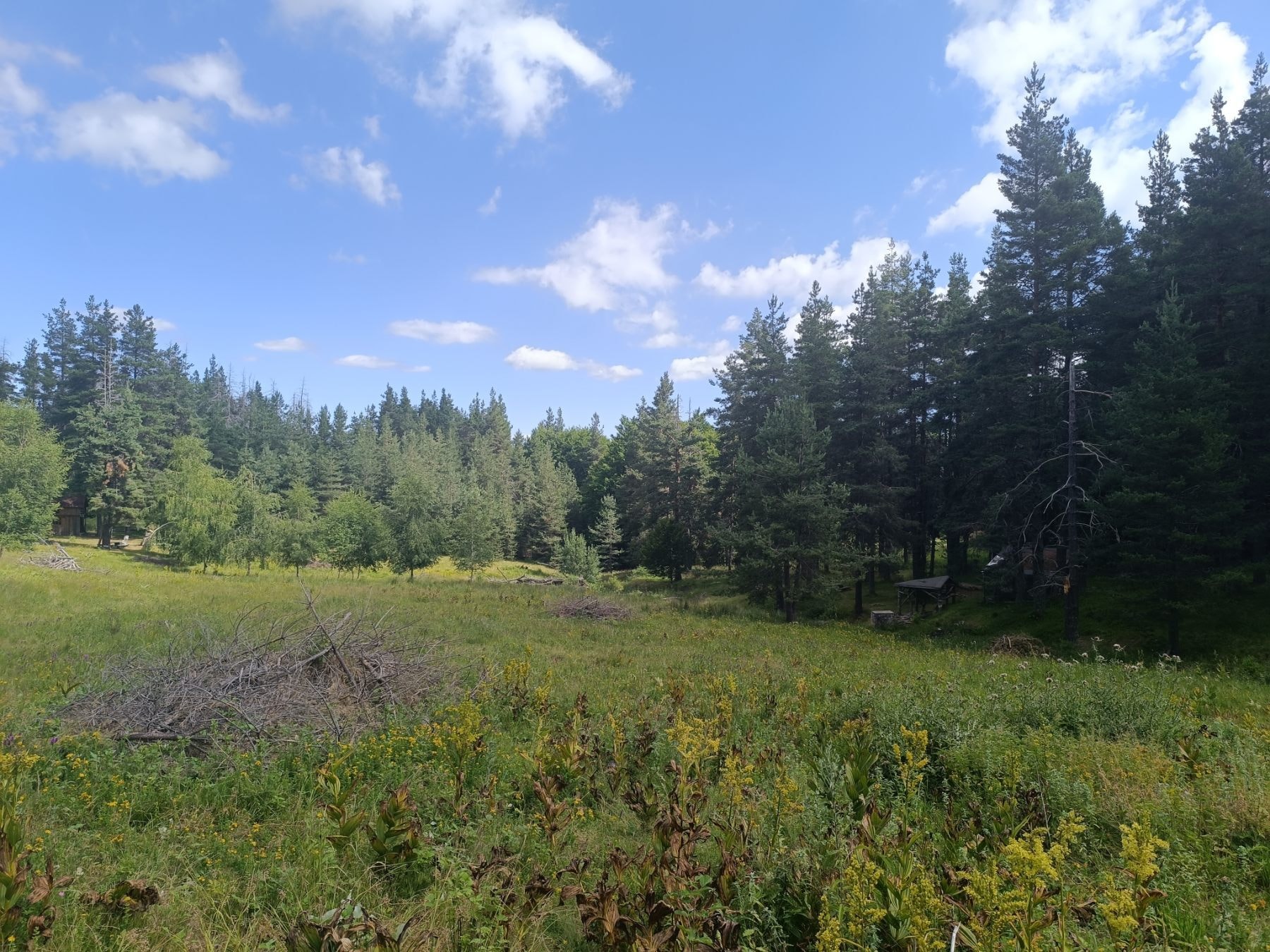
Mogilitsa is a small village at 960 m in the Upper Arda valley, in the eastern part of the Western Rhodopes, 26 km south of Smolyan and close to the Greek border. It is uncrowded, and it happens to hold enough different kinds of day that you can decide the shape of your trip once you arrive rather than before. Below are five travellers. Read down until one of them sounds like you.
First, the good news about not knowing
Indecision is usually treated as a problem to solve before you book. Here it is closer to an advantage. A single base in Mogilitsa puts hard border-ridge walks, gentle guided cave days, Thracian rock inscriptions and quiet forest all within reach of the same guesthouse, so you do not have to commit to one identity for the whole week. You can walk hard on Monday, drift through a canyon by boat on Tuesday, and sit with a coffee and a view on Wednesday.
The other reason this works is that the valley stays quiet. This is an uncrowded mountain trip in Europe in a real sense: the routes are not queued, the viewpoints are not fenced with selfie lines, and the guesthouses are family-run rather than industrial. That means the place can flex around your mood instead of the other way round. The profiles below are not marketing types. They are five honest ways to spend the days here, and the local society can build any of them around you.
The ridge walker: you want the day to cost you something
If a holiday only counts when your legs ache by evening, the long routes above Mogilitsa are the reason to come. The Varadsko fortress walk runs to about 19 km and takes seven to eight hours, following old ground up to ancient walls, and it earns its length. The source of the Arda route climbs to a border peak, Ardin, at 1,730 m, where the map runs out and Greece begins on the far side of the ridge.
If you want distance without the full fortress day, the Kartalovi clearings loop is a medium 15 km, and it carries a payoff you cannot manufacture: a rock inscription cut four to five thousand years ago, still there in the open. These are proper mountain days, so the practicalities matter. The best walking runs from late spring to autumn, guided routes need a minimum of four people and mountain insurance, and it is worth agreeing your route and your turnaround time before you set off.
The family or easy-day traveller: you want the good bits, not the suffering
Plenty of people want the scenery and none of the seven-hour slog, and that is well catered for here without pretending it is hardcore. The guided cave and canyon days are the obvious start. The cave, Rufinka and Gorlo tour and the cave, waterfalls and Gorlo tour take in caves, a short boat trip through the 100 m Gorlo Canyon and waterfalls, which is a lot of variety for one gentle day out.
If you would rather stay above ground, the day of panoramic platforms strings together glass viewpoints and long views with very little effort. For a smaller, odder thrill, Nadarska Cave is short and undeveloped, entered with a guide and a headlamp, which children tend to remember longer than any museum. These guided tours need a minimum of four people, so a family or a pair of couples usually clears that on its own.
The history and culture lover: you want the layers, not just the view
If a landscape only comes alive once you know what happened on it, the Upper Arda valley has unusual depth for its size. The Thracian rock inscription on the Kartalovi clearings route is thousands of years old and sits in the open air rather than behind glass. The Varadsko fortress gives you ancient walls at the end of a real walk. Mount Kom is a sacred ridge carrying legends of a possible sanctuary of Dionysus, which is the kind of story that changes how a hilltop feels underfoot.
The thread continues into more recent centuries. Kremene has a church dating to 1896, the fortified Agushevi Konatsi stand nearby as a reminder of Ottoman-era grandeur, and the folk song of Rufinka is still tied to this valley and its people. An English-speaking guide is the difference between seeing these places and understanding them, and here you can arrange exactly that.
The one who needs to switch off: you want less, done properly
Sometimes the honest answer to what you want from a holiday is nothing in particular. No itinerary, no ticking off, no early alarm. For that, Mogilitsa and the small villages around it are built the right way: family guesthouses, home cooking, and quiet forest that asks nothing of you. The point is not what you achieve but how little you have to.
There is one walk worth making even in this mood, because it is short and it rewards stillness rather than effort. The source of the Arda rises under a beech tree more than a hundred years old, and sitting there for a while is closer to the reason people come here than any summit. Bring a book, eat what the guesthouse cooks, and let the days stay shapeless. That is a legitimate way to use this valley.
The first-timer to Bulgaria: you want it to be easy to arrange
If you have never travelled in Bulgaria and that is half of what is holding you back, the logistics here are simpler than they look from home. You fly into Sofia and drive in, which takes about four hours. Bulgaria uses the euro, so there is no unfamiliar currency to work out on arrival.
The local society, founded in 1965 and revived in 2017, works with English-speaking guides who can help you choose routes and guided days for your first visit.
Still undecided? Let the guide decide the details
If you have read all five and still cannot pick, that is fine, and it may even be the best position to book from. You do not have to arrive with a finished plan. Tell the local guides roughly what you are after, hard days or easy ones, old stones or quiet forest, and they can assemble the week around that, adjust it once you see the valley for yourself.
The practical frame is simple: fly to Sofia and drive about four hours, come between late spring and autumn for the best walking, pay in euros, and remember that guided tours need at least four people. Beyond that, the smallest decision you can make is to choose the place and let someone who knows it choose the days. In Mogilitsa, that is a normal way to travel.
Common questions
- Where should I go on holiday if I am not sure what I want?
- Somewhere that holds several kinds of trip in one base, so you can decide once you arrive. Mogilitsa in the Bulgarian Rhodopes puts hard ridge walks, gentle guided cave and canyon days, ancient history and quiet forest within reach of the same village, so you are not locked into one style before you go.
- Is this a good uncrowded mountain trip in Europe?
- Yes. Mogilitsa sits at 960 m in the Upper Arda valley in the Western Rhodopes, 26 km south of Smolyan near the Greek border. It is uncrowded, with family-run guesthouses and routes that are not queued, which is unusual for a European mountain destination.
- What is there for people who do not want long hard walks?
- Plenty. Guided day tours combine caves, a boat trip through the 100 m Gorlo Canyon and waterfalls, and the day of panoramic platforms links glass viewpoints with little effort. Nadarska Cave is a short, undeveloped cave entered with a guide and headlamp. Serious walkers have longer routes like the 19 km Varadsko fortress day if they want them.
- How do I get there, and what will it cost to arrange?
- Fly into Sofia and drive in, which takes about four hours. Bulgaria uses the euro. Guided tours need a minimum of four people, and the best walking runs from late spring to autumn.
- Can someone plan the trip for me if I do not know what to book?
- Yes. The local society works with English-speaking guides who can shape a trip. You can tell them roughly what you want, hard days or easy ones, history or quiet, and they will build and adjust the week around that.